Resources / Preparedness / Communications
Emergency Communications
Staying in contact and informed when cell towers and the internet are not a given.
The Rundown
Cell phones are a single point of failure, and communications readiness is about layering backups underneath them, not replacing them. Start by knowing your coverage gaps, then add a $25-35 handheld radio per adult and actually test it. From there it's repeaters, a shared channel plan or a $35 GMRS license, a digital radio and mesh device, satellite communication, and eventually a HAM license with a group check-in schedule tying it all together. Most households get meaningfully more resilient for the cost of one decent radio.
Target, time, and cost figures below are planning estimates, not guarantees. They'll vary by household size, region, and what you already have on hand.
Jump to a Step
Know Your Cell Network's Limitations
Household aware of coverage and network gaps
Get a Handheld Radio and Learn Local Channels
1 handheld radio per adult, GMRS/FRS channels known
Charge, Test, and Practice With Your Radio
Radio charged and tested monthly
Program Local Repeaters Into Your Radio
Local repeaters programmed into every radio
Set a Group Channel Plan or Get Licensed
1 shared channel plan or GMRS license per household
Add a Digital Radio and Mesh Device
1 digital radio and 1 mesh device per household
Layer in Satellite Communication
1 satellite communicator per household
Get Licensed and Set a Group Check-In Schedule
HAM Technician license and group check-in schedule, per household
Know Your Cell Network's Limitations

Cell networks are the first thing to overload or go down in a real event, exactly when you need them most. This stage costs nothing, it's just an honest look at where your plan currently has no backup.
Do This
- Identify the spots near your home, work, and regular routes with weak or no cell coverage.
- Talk through what your household would do if cell service was down for a full day.
- Agree on an out-of-area contact everyone calls or texts, long-distance routes differently than local.
- Write down key phone numbers on paper, most people only have them saved in a phone that could die.
Get a Handheld Radio and Learn Local Channels

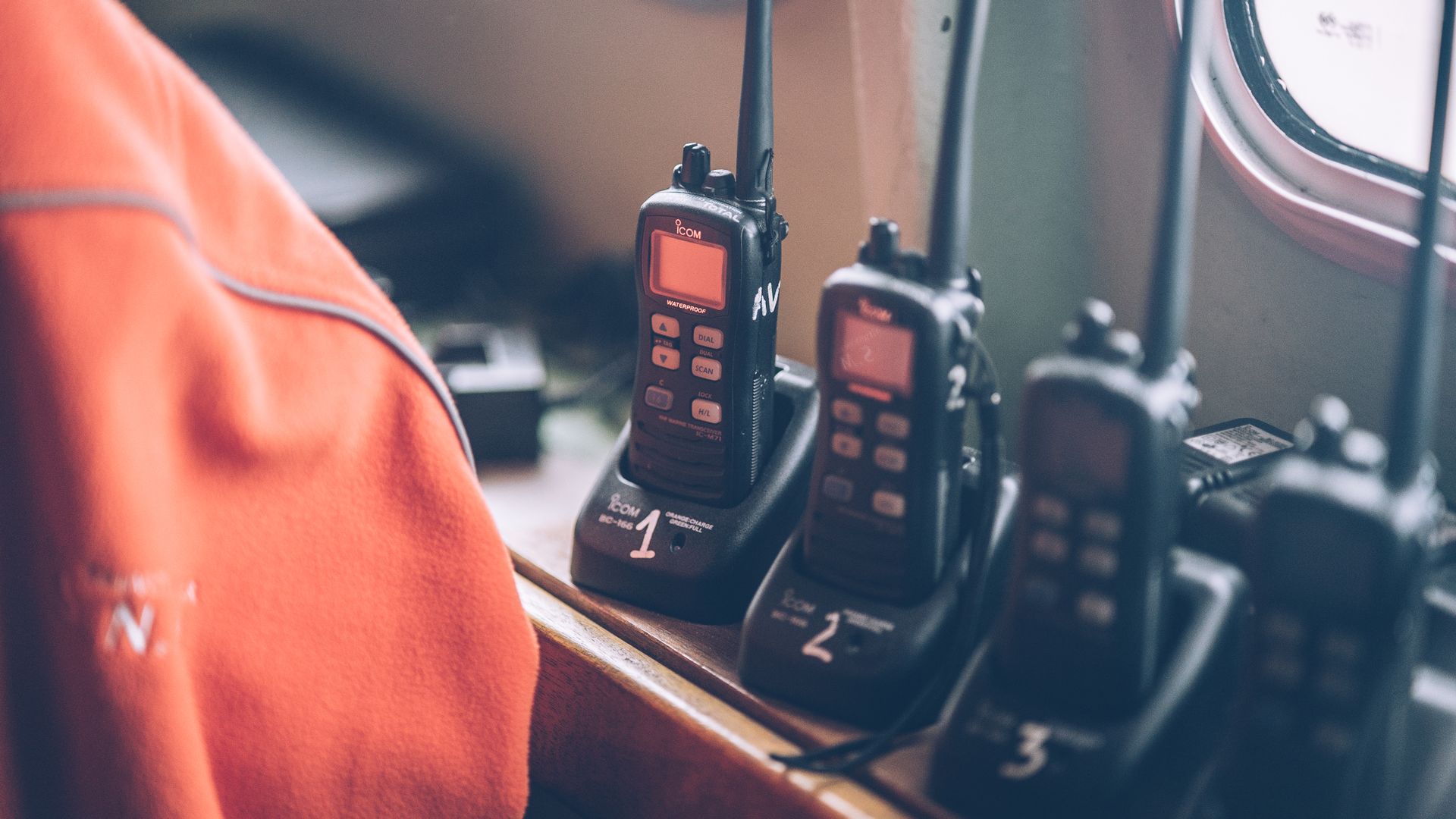
A Baofeng UV-5R or similar handheld radio is inexpensive and covers most household and neighborhood communication needs without depending on cell service at all.
Do This
- Buy one radio per adult, a UV-5R or comparable model runs about $25-35 each.
- Look up the GMRS and FRS channels commonly used in your area.
- Write the channel list somewhere it'll actually be kept with the radio, not just remembered.
- Charge every radio fully before it goes into storage or a bag.
Charge, Test, and Practice With Your Radio

A radio that's never been tested is a guess, not a plan. This is the step people skip, and it's the one that actually confirms the gear works when it matters.
Do This
- Set a recurring monthly reminder to charge every radio in the household.
- Do an actual test call between household members on your chosen channel.
- Confirm range from likely locations: the house, the car, a neighbor's yard.
- Consider a spare battery or charging cable ($10-15) so one dead battery doesn't take a radio offline.
Program Local Repeaters Into Your Radio

Repeaters extend a handheld radio's range from a mile or two to potentially dozens, by relaying your signal from a fixed, elevated station.
Do This
- Look up active repeaters in your area through a repeater directory site.
- Program the relevant frequencies and tones into each household radio.
- A USB programming cable ($15-20) makes this far less tedious than doing it by hand on the radio itself.
- Test a call through a repeater at least once so it's not the first time under pressure.
Set a Group Channel Plan or Get Licensed

A radio is only useful if everyone agrees on which channel to use and when. A written plan, or a GMRS license that legally covers higher power and repeater use, both solve this.
Do This
- Write a simple channel plan: primary channel, backup channel, and check-in times.
- Share the plan with every household member who carries a radio.
- Consider a GMRS license (about $35, covers your whole household, no test required).
- Revisit the plan any time you add a new radio or a new household member.
GMRS vs. HAM, in Plain Terms
A GMRS license (about $35, no test) covers your household on GMRS channels, higher power, and repeaters. A HAM license takes an exam but opens up far more frequencies and range. Most households only need GMRS to meaningfully improve on cell-only communication, HAM is a later upgrade, not a starting requirement.
Add a Digital Radio and Mesh Device

A digital radio like a Retevis DM-5R and a Meshtastic mesh device add clearer signal and text-based communication that doesn't depend on any single relay point.
Do This
- Add a digital radio, a Retevis DM-5R or equivalent runs roughly $50-70.
- Add a Meshtastic-compatible mesh device (roughly $30-45) for off-grid text messaging between nodes.
- Pair the mesh device with a phone app while you still have signal, so setup isn't new to you later.
- Test both with another household member before relying on either.
Layer in Satellite Communication

A satellite communicator works when cell towers, repeaters, and mesh networks all don't, useful anywhere you have a clear view of the sky, not just where infrastructure is standing.
Do This
- Choose a satellite communicator with two-way messaging, not just SOS-only.
- Budget for the monthly or annual subscription, the device alone doesn't work without it.
- Register your emergency contacts in the device before you need it.
- Test sending a message from a real outdoor location at least once.
Get Licensed and Set a Group Check-In Schedule

This is the full layered system: cell, analog radio, digital radio, satellite, and mesh, held together by a HAM license and a check-in schedule your whole group actually keeps.
Do This
- Study for the Technician-class HAM exam using a $20 study guide, most people pass within a few weeks of casual study.
- Take the exam (roughly $15 fee) at a local testing session, results come same day.
- Set a recurring check-in schedule (daily or weekly) across every layer of comms your household has.
- Review the full system once a year: licenses, batteries, subscriptions, and contact lists.
You don't need every layer to be better off than cell-only. A radio, a plan, and a check-in schedule your household actually uses cover most real scenarios, everything past that is added resilience, not a requirement.
Common Questions
GMRS or ham radio: which should I get?
GMRS is the easier start. One FCC license (currently $35, no exam) covers your immediate family for 10 years. Ham radio requires passing an exam but opens far more frequencies, range, and repeaters. Many households start with GMRS and add ham later.
Do I need a license for a GMRS or two-way radio?
FRS radios, the common blister-pack walkie-talkies, need no license. GMRS radios need an FCC GMRS license, and amateur (ham) radios need an amateur license earned by exam.
What is a family communication plan?
A written plan with everyone's contacts, an out-of-area contact, meeting places, and a set channel and check-in schedule for your radios, so everyone knows how to reach each other when cell service doesn't work.
Keep Building
Your Next Guide


Have Something to Add?
If you're a client or instructor with resources worth sharing here, reach out.
Get in Touch