Resources / Preparedness / Emergency Lighting
Emergency Lighting & Power Outage Kit
Reliable light sources for when the power is out and staying oriented matters most.
The Rundown
Most households have exactly one flashlight and batteries nobody's checked in years. Start with an honest inventory, build a 2-week base of flashlights and candles, then get a headlamp on every household member so hands stay free. From there it's lanterns and solar charging to cover a full room, then volume and rotation up to 2 months, a real charging setup for the whole household, a 3-month candle and fuel reserve, and a generator as the final backup layer, not the first purchase.
Target, time, and cost figures below are planning estimates, not guarantees. They'll vary by household size, region, and what you already have on hand.
Jump to a Step
Take Inventory of What You Already Have
Know what actually still works
Build a Two-Week Flashlight and Candle Base
2 weeks of basic light, whole household
Get a Headlamp for Every Household Member
1 headlamp per household member
Add Lanterns and a Solar Charger, Reach One Month
1–2 months of light, room-level coverage
Extend to Two Months and Build a Rotation Schedule
2 months of light, batteries tracked and rotated
Add a Solar or Battery Bank for Whole-Household Charging
Charging capacity for the full household’s lighting gear
Build a Full Three-Month Reserve of Candles and Fuel
3 months of candles and lantern fuel
Cover Every Area with a Generator Backup
Every regularly-used area lit, plus generator backup
Take Inventory of What You Already Have

Most households have one flashlight in a junk drawer with batteries nobody's checked in years. Find out what you actually have, and whether it still turns on.
Do This
- Find every flashlight, lantern, and candle in the house and test each one.
- Check the batteries already installed and pull any that are leaking or corroded.
- Note which rooms have zero backup light sources right now.
- Set aside one drawer or bin for lighting gear, separate from junk-drawer clutter.
Build a Two-Week Flashlight and Candle Base

A couple of working flashlights and a stock of candles covers the most common outage: a storm knocks the power out for a night or two, and you can still find the bathroom.
Do This
- Buy at least one working flashlight per adult, plus a couple of spares.
- Add a dozen basic candles and a few lighters or waterproof matches.
- Store fresh batteries sized to match your flashlights, not whatever you already had lying around.
- Place one flashlight somewhere predictable in every regularly-used room.
Get a Headlamp for Every Household Member

A flashlight takes up a hand you probably need for something else. A headlamp on every person in the house means everyone can move, cook, or carry something without holding a light.
Do This
- Buy one headlamp per household member, sized appropriately for kids if needed.
- Pick models with a low/red-light mode to preserve night vision and battery life.
- Add 2–4 weeks of matching batteries or a rechargeable option per headlamp.
- Keep each person’s headlamp in a consistent spot they can find in the dark.
Rechargeable vs. Disposable
A rechargeable headlamp saves money over time and cuts down on battery stockpiling, but it’s useless once its internal battery dies with no power to recharge it. The safest approach is a mix: rechargeable for daily use, with a few disposable-battery backups stored alongside your battery reserve.
Add Lanterns and a Solar Charger, Reach One Month

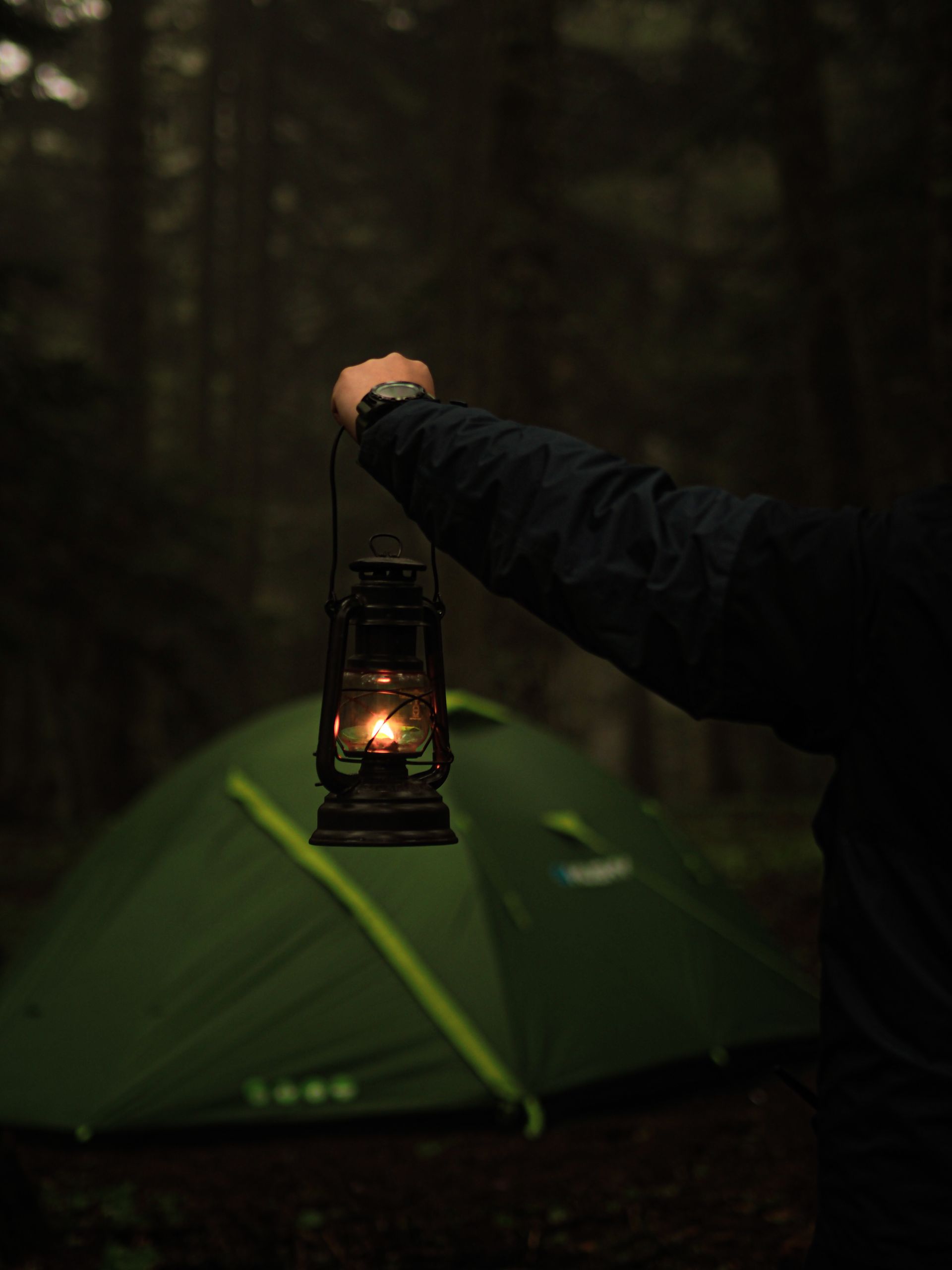
Headlamps and flashlights are for moving around. A lantern is for lighting a whole room so the household isn't stuck sitting in the dark waiting for morning.
Do This
- Add at least one battery or rechargeable lantern per commonly-used room.
- Add a small solar charger or solar power bank to top off batteries without grid power.
- Extend your candle and flashlight battery stock from stage 2 out to a full month.
- Test the solar charger once in direct sun so you know it actually works before you need it.
Extend to Two Months and Build a Rotation Schedule

Stockpiled batteries lose charge sitting in a drawer, and old ones can leak and ruin the device they're in. This stage is about volume and tracking together.
Do This
- Buy enough batteries in your household’s common sizes to reach a 2-month runtime estimate.
- Label a specific bin as your rotation stock, separate from batteries currently in devices.
- Set a recurring reminder, quarterly is reasonable, to check for leaks and swap oldest stock into daily use.
- Keep your written inventory current: sizes, quantities, and the date you last checked them.
Add a Solar or Battery Bank for Whole-Household Charging

A single solar charger is fine for one headlamp. Getting a whole household's rechargeable gear through an extended outage takes a bigger panel or a dedicated battery bank behind it.
Do This
- Add a larger portable solar panel or a power station sized to your household’s rechargeable devices.
- Map out which lighting gear is rechargeable versus disposable-battery so you know what actually needs it.
- Test the full charging setup on a normal weekend, not for the first time during an outage.
- Store the panel and any cables together where you can find them without light.
Build a Full Three-Month Reserve of Candles and Fuel

Batteries and solar charging cover the electronics. Candles and lantern fuel are the low-tech backup that doesn't care whether anything else is working.
Do This
- Build your candle stock up to a realistic 3-month estimate based on stage 2’s burn rate.
- Add fuel for any liquid-fuel lanterns you own, stored per the manufacturer’s guidance.
- Keep candles away from heat sources and check wicks aren’t brittle from age.
- Rotate older candles into normal use (power outages, ambiance, whatever) so stock stays fresh.
Cover Every Area with a Generator Backup

This is the last layer, not the first purchase. A portable generator backs up everything built in stages 1–7 and can run real lighting fixtures, not just battery devices.
Do This
- Size a portable generator to your realistic essential loads, lighting included, not your whole house.
- Store fuel safely and separately, following manufacturer guidance, and rotate it on a schedule.
- Confirm headlamps, lanterns, candles, and solar charging cover every regularly-used room without the generator running.
- Test the generator on a normal weekend under an actual load before you need it for real.
You don't need a generator on day one, and most households build up to one slowly if at all. The goal is steady depth: a headlamp that works when you reach for it, batteries that are actually charged, and a few layers behind that in case the first one fails.
Common Questions
What's the best light for a power outage?
A headlamp for every household member, so hands stay free, plus a lantern or two to light a whole room. Flashlights fill in the gaps. Standardizing on one battery size makes the whole setup easier to keep running.
Are candles safe during a power outage?
Battery and rechargeable lights are safer and should come first. If you use candles, never leave them unattended, keep them away from anything flammable, and keep them out of reach of kids and pets.
What supplies do you need for a power outage?
Light first: a headlamp for every person, a lantern or two, and spare batteries. Then water (1 gallon per person, per day), food you can eat without power or a backup stove, a battery or hand-crank radio, and a way to charge phones. Each of those has its own guide in this series.
Keep Building
Your Next Guide

Have Something to Add?
If you're a client or instructor with resources worth sharing here, reach out.
Get in Touch